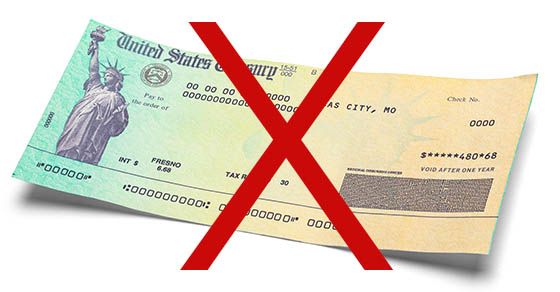
As of September 30, 2025, the IRS and other federal agencies officially stopped issuing paper checks. This means that tax refunds, Social Security benefits, Veterans' benefits, and most other federal payments are now delivered electronically only. If you’re used to getting a paper check in the mail, this is an important change to understand.
Who Is Affected?
- If you already receive direct deposit: Nothing changes for you—you’re all set.
- If you used to receive paper checks: You now need to switch to one of the approved electronic options:
- Direct deposit into a U.S. bank account, or
- The Treasury’s Direct Express® Debit Mastercard®
- If you don’t have a bank account: This change will affect you the most. Unbanked or underbanked individuals—including some elderly, disabled,
or rural residents—will need to explore options like prepaid debit programs.
- U.S. citizens abroad: IRS direct deposit only works with U.S. banks, which complicates refunds for Americans overseas.
Why the Change?
The move to electronic payments was not arbitrary. It’s part of a broader effort to modernize how the federal government handles money. The goals are:
- Speed: Direct deposit gets money to you faster than the mail.
- Security: Electronic payments are far less likely to be lost or stolen.
- Cost Savings: Printing and mailing checks is expensive and eliminating them saves taxpayer dollars.
Refunds vs. Payments to the IRS
It’s important to distinguish between money the IRS sends to you and money you send to the IRS:
- Refunds: Paper refund checks are no longer issued.
- Payments: For now, you can still mail a paper check when paying taxes. The IRS has said it will give plenty of notice if it ever requires electronic payments across the board.
How to Stay Prepared
Here’s what you can do to ensure you’re ready:
- Provide your bank account and routing number on your tax return.
- Sign up for direct deposit at GoDirect.gov if you’re receiving Social Security, Veterans, or other federal benefits.
- Familiarize yourself with IRS electronic payment options like IRS Direct Pay and The Electronic Federal Tax Payment System (EFTPS) for paying taxes.
- Consider opening a checking account if you don’t already have one—it will make this transition much smoother.
How We Can Help?
At Steven W. Falcone, CPA, we know transitions like this can feel overwhelming. Whether you’re managing your own taxes, caring for an elderly parent, or living abroad, we can:
- Explain exactly how this change impacts you,
- Help set up direct deposit or explore debit card options,
- Make sure no refunds or payments slip through the cracks.
Bottomline: Paper checks for federal payments officially ended on September 30, 2025. If you haven’t already made the switch, now is the time to ensure your payments continue smoothly.